Mercy Love Font for Web Design Projects
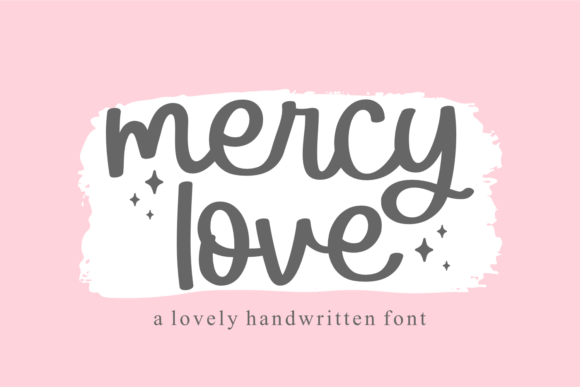
As a web designer, I'm always on the hunt for fonts that add character without compromising clarity. Recently, I was working on a wedding invitation landing page for a boutique studio and needed something with heart — literally. That’s when I discovered Mercy Love, a script handwritten font that brings warmth and personality to any design. Its playful curves and smooth flow immediately stood out as a perfect match for love-themed projects, but I wanted to test how it would perform in a real website context before committing.
Testing Mercy Love in a Wedding Invitation Landing Page
I started by placing Mercy Love in the hero section of the site, where the main headline would be displayed. The handwritten font added an emotional touch that felt just right for the subject matter. It wasn’t too casual or over-the-top ornate, which is a tricky balance with many script handwritten typefaces. The key factor here was readability: even though it's a decorative font, the characters are well-structured and maintain legibility at large sizes on both desktop and mobile screens.
I also tried overlaying Mercy Love on a soft pastel background image, which is common in wedding sites. Surprisingly, the contrast held up pretty well — especially since the font has a slightly thicker baseline than most cursive scripts. This subtle weight helped it stand out without needing heavy outlines or shadows, which keeps the layout clean and modern.
Mercy Love for Branding and Creative Portfolios
Beyond wedding invitations, I began thinking about other use cases for Mercy Love. A creative portfolio site often needs a unique visual hook to set it apart, and this font could serve as a strong branding element. For instance, using Mercy Love in the logo text or a tagline adds a personal, approachable feel that resonates with clients who value authenticity and storytelling.
In one case, I paired Mercy Love with a minimalist sans serif like Lato for body copy. The contrast worked beautifully — the script font commanded attention while the sans serif maintained professionalism and ease of reading. This kind of font pairing helps guide users through the content hierarchy naturally, making the experience more intuitive.
Using Mercy Love in Call-to-Action Buttons and Banners
One challenge I faced was using Mercy Love in call-to-action (CTA) buttons. While it looks stunning in headers, the intricate details of the script handwritten font didn't render cleanly at smaller sizes. I ended up using it only for larger banners and headlines, reserving simpler typography for interactive elements. This decision kept the user interface clear and prevented accidental misreads, which is crucial for conversions.
On the online store section of the project, I tested Mercy Love for product titles and promotional banners. The results were mixed — while it added charm to seasonal collections or themed bundles, it wasn’t suitable for long lists of products. In those cases, I switched back to a clean sans serif to ensure quick scanning and usability. But for limited-time offers or curated gift guides, Mercy Love gave the brand a cozy, handcrafted feel that aligned perfectly with their aesthetic.
Mercy Love in Campaign Pages and Branded Content
I later used Mercy Love on a campaign landing page for a wellness coach. The goal was to create a welcoming atmosphere with a gentle, human touch. Placing the font in the hero title and a few section headings made the page feel more personal and less corporate. The Script Handwritten style helped convey trust and relatability, which are essential for service-based businesses looking to connect emotionally with their audience.
However, I had to be careful not to overuse it. Too much Mercy Love can make a site feel cluttered or unprofessional. My rule of thumb became: use it for display text where impact matters more than information density. That includes hero sections, feature highlights, testimonials, and promotional graphics — all areas where the handwritten font shone without sacrificing function.
Responsive Typography and Mobile Readability with Mercy Love
When optimizing for mobile devices, I noticed that Mercy Love performed best above 36px. Below that, the serifs and flourishes got lost in the pixelation, making some letters hard to distinguish. To address this, I created a media query that adjusted the font size and line height based on screen width, ensuring the Script Handwritten style remained legible across all devices.
Another consideration was the background color. On dark backgrounds, I found that a slightly lighter version of Mercy Love helped it pop without being harsh. Conversely, on light or pastel tones, the default weight provided enough contrast without overwhelming the layout. These small tweaks made a big difference in how the font was perceived in different contexts.
Font Licensing and Project Requirements
Before finalizing the design, I checked the licensing options for Mercy Love. Since it’s a commercial font, it’s safe to use for client projects, online stores, and branded content — no need to worry about restrictions or hidden fees. It supports several file formats, including TTF and OTF, which gives me flexibility depending on the platform or CMS I’m using.
The font doesn’t come with multiple weights or styles, so if you're looking for bold or italic variations, you might want to pair it with another typeface for contrast. However, its consistent stroke and tone mean it still works well within a cohesive brand identity system. I’ve seen many designers struggle with inconsistent script fonts, but Mercy Love maintains a steady rhythm that feels intentional and professional.
Design Assets and Brand Consistency with Mercy Love
Because the Mercy Love font has such a distinct personality, I included it in the brand kit for the wedding project. From social media posts to email signatures, the Script Handwritten style reinforced the brand’s warm and inviting tone. It became a core part of the visual language, especially in marketing materials where a personal touch was important.
For digital ads and blog headers, I found that Mercy Love performed exceptionally well. The handwritten font caught attention without being garish, and it paired nicely with photography-driven layouts. Just keep in mind that it’s better suited for short phrases rather than long-form text — its charm lies in the details, not in endurance.
Why Mercy Love Stands Out Among Script Handwritten Fonts
Many script handwritten fonts either look too stylized or lack structure. Mercy Love strikes a balance between artistry and usability. It doesn’t demand a lot from your layout to work effectively, which is rare for a decorative typeface. You don’t have to justify every curve or flourish because the font itself feels natural and readable.
This makes it a great choice for brands that want to stand out with a personal, handcrafted vibe. Whether it’s a course sales page for a relationship coach or a blog redesign focused on love and connection, Mercy Love adds a layer of emotion that flat typography often misses.
Final Layout Adjustments and User Experience Considerations
To ensure the best user experience, I limited Mercy Love to key visual spots and avoided using it in menus, footers, or anywhere dense text would be needed. Instead, I reserved it for logos, hero statements, and featured quotes. This way, it served as a highlight rather than a hindrance.
I also tested loading times. Because Mercy Love is a premium font, the file size is optimized for performance. It loads quickly on websites and integrates smoothly into responsive designs. That’s a big win for anyone building high-converting landing pages or maintaining a fast-loading online store.
Overall, Mercy Love proved itself to be more than just a pretty Script Handwritten font. It brought warmth, consistency, and a touch of elegance to the project. And in the world of web design, that’s exactly what you need to build a lasting brand identity.