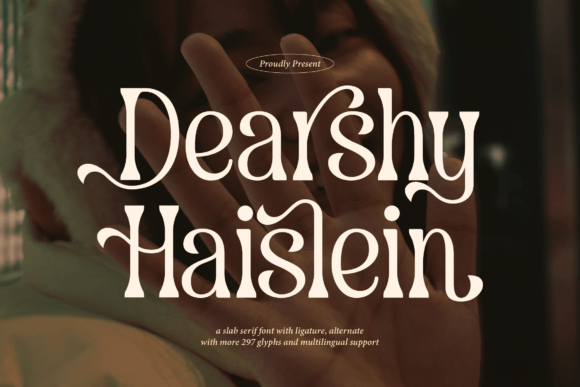
Dearshy Haislein Font in Branding Projects
So there I was, staring at a blank brand board for a local café that wanted to feel both warm and upscale. The owner had already gone through a few fonts that were either too playful or too corporate. That’s when I remembered seeing Dearshy Haislein, a bold Slab Serif font with strong edges and a confident presence. It immediately stood out as something that could bridge the gap between approachable and refined.
Dearshy Haislein for Logo Design and Brand Identity
I started by placing Dearshy Haislein into the logo mockup. The thick strokes and sturdy letterforms gave the café name a sense of authority without feeling stiff. Unlike some Fonts that can look too heavy or aggressive, this one had a classic elegance that made it perfect for branding that needed to be memorable yet welcoming.
The owner loved how it read clearly on a shop sign but also carried enough weight to feel like a premium typeface. In logo design, especially for small businesses, finding a balance is key — and Dearshy Haislein nailed it. Its Slab Serif roots brought a timeless charm, while the boldness helped it stand out against busy backdrops or photography-heavy layouts.
Dearshy Haislein in Packaging and Merchandise
Next, I moved onto packaging mockups. Coffee bags, mugs, and takeout containers are all places where a font needs to work hard. Dearshy Haislein handled each scenario well. On a matte kraft bag, it added a touch of sophistication; on a ceramic mug, its strong edges ensured legibility even from a distance.
One thing I noticed early on was how consistent the Slab Serif style remained across different materials. This is crucial for building a cohesive brand identity. Whether you’re printing labels or designing digital templates for merchandise, having a font that adapts well is half the battle won.
Using Dearshy Haislein in Website Headers and Social Media Graphics
For the website, I tested Dearshy Haislein in the hero section and navigation bar. As a display Font, it performed exceptionally well. The boldness caught attention right away, and the clean lines didn’t interfere with the imagery behind them. I used it sparingly for headlines, which helped maintain visual hierarchy without overwhelming the user.
On social media graphics, especially for Instagram posts promoting seasonal drinks, the font worked beautifully. It wasn’t too flashy, but it had just enough character to make the content pop. The thickness of the letters helped ensure clarity on mobile screens, which is essential for engagement in today’s fast-scrolling world.
Dearshy Haislein for Product Labels and Flyers
In printed marketing materials like flyers and product labels, I found Dearshy Haislein to be surprisingly versatile. For a hand-dipped chocolate label, the font added an artisanal feel. For a flyer advertising weekend brunch, it lent a sense of reliability and professionalism. The contrast between the bold letters and softer supporting text made everything easier to read and more visually appealing.
When working with short-form text, such as a sticker for the café’s loyalty program, the Slab Serif structure allowed me to keep things simple and impactful. There’s no need for extra decoration when the typeface itself has such a strong personality.
Font Pairing with Dearshy Haislein
Now, let’s talk about pairing. One of the first things I did was test Dearshy Haislein with other Fonts to see what worked best. Since it’s a bold Slab Serif, I leaned into contrasting styles for body text. A light sans serif like Lato or Open Sans paired really well, allowing the headline to shine while keeping the rest of the copy clean and easy to digest.
If the project had a more creative edge, I might have paired it with a script font for taglines or signatures. But in most cases, sticking with a simpler secondary font was better for readability and brand consistency. The key is to let Dearshy Haislein lead the way in high-impact areas, then support it with subtler choices elsewhere.
Testing Dearshy Haislein Before Full Integration
Before committing to using Dearshy Haislein in the full brand system, I always suggest doing a few quick tests. Try it in black and white to assess contrast, and check how it looks in smaller sizes if you plan to use it for anything beyond logos and headers. Also, evaluate whether it works across multiple languages — if your client plans to expand or serve a multilingual audience, confirm that the Font supports those characters.
Another step I took was to print the logo and packaging designs on various paper stocks. Surprisingly, the texture of the paper enhanced the font’s boldness slightly, making it feel even more substantial in physical form. That kind of detail can influence a client’s decision to go with a premium font like Dearshy Haislein.
Dearshy Haislein for Editorial and Poster Design
Later in the project, the café owner asked for a poster series highlighting their in-house pastry chef. Here, Dearshy Haislein came into its own again. Used in large headings with a subtle drop shadow, it created a strong focal point without being overpowering. The posters were used both online and in-store, and the font adapted well to both environments.
Even in editorial design — like a menu layout or newsletter — the font held up. Though not ideal for long paragraphs, it worked perfectly for titles, categories, and call-to-action phrases. It’s clear that Dearshy Haislein is intended as a display Font, and it delivers exactly that.
Commercial Use and Licensing Considerations
One of the beauties of working with Dearshy Haislein is knowing it’s suitable for commercial use. Whether you're designing a logo for a client or creating packaging for a product-based business, the licensing flexibility is reassuring. Always double-check the included file formats and weights — in this case, the standard TTF and OTF files covered most needs, and the single weight offered enough variation for the brand without complicating the system.
Also worth noting: there were no unnecessary alternates or ligatures to complicate the process. Sometimes, too many options can dilute the strength of a Slab Serif font, but here, simplicity served the purpose well. It’s a font that does one thing and does it confidently.
Dearshy Haislein Adds Confidence to Creative Work
What I appreciate most about Dearshy Haislein is how it instantly elevates the tone of a project. It doesn’t shout, but it commands attention. That’s a rare trait in a Font, especially one that’s meant for branding. The café’s new identity felt grounded in authenticity, thanks in part to the thoughtful choice of typography.
It’s also incredibly useful for freelancers or small studios who want to deliver a polished look without overcomplicating the design. You don’t need to spend hours adjusting spacing or tracking because the font is already balanced and readable at larger sizes.
Dearshy Haislein in Real-World Branding Scenarios
Let’s say you’re working with a boutique or skincare brand. Dearshy Haislein can bring a luxurious feel to product names and store signage. If it's a handmade shop or creative studio, the font adds a professional polish while still feeling personal. And for a local restaurant looking to build trust with diners, the boldness and clarity of this Slab Serif can help establish credibility right from the start.
Its versatility extends to web design as well. When placed in a header above a hero image, it doesn’t compete with the visuals — instead, it enhances the message. I’ve seen clients get nervous about using bold Fonts online, fearing they’ll lose subtlety. But with Dearshy Haislein, the fear is unfounded. It’s modern enough for digital spaces and classic enough to feel trustworthy.
Dearshy Haislein for Business Cards and Short-Form Text
Even on business cards — a place where every detail matters — Dearshy Haislein performed admirably. The font’s strong edges and compact form made it easy to fit the essentials (name, title, contact info) without crowding the card. It looked professional next to the minimalist background and complementary colors.
This led me to consider other short-form uses like event tickets, QR codes, or promotional tags. In these scenarios, the font’s boldness ensures visibility and legibility, which is vital for any printed material that needs to be read quickly or from afar.
Why Dearshy Haislein Works Well in Brand Systems
Brand systems thrive on consistency and memorability. Dearshy Haislein helps with both. Once you decide it fits the project, you can use it strategically across all touchpoints — from storefronts to email newsletters — and it will maintain a unified voice.
Because it’s a Slab Serif, it naturally conveys tradition and craftsmanship. But since it’s stylized in a modern way, it avoids looking outdated. This makes it ideal for businesses that want to appear both reliable and contemporary. The font’s thickness gives it a tactile quality, which is especially effective in print-based design assets like packaging or stationery.
Dearshy Haislein vs. Other Fonts in Similar Projects
I’ve used other Fonts in similar branding projects, but Dearshy Haislein stands out. It’s bolder than many traditional slab serifs and less rigid than some modern alternatives. The result is a font that feels authoritative but not intimidating, stylish but not overly complex.
Compared to popular Fonts like Playfair Display or Baskerville, it offers a stronger visual punch that’s better suited for logos and signage. While those fonts are great for editorial design, Dearshy Haislein leans more toward display use, which is exactly where it shines.
Final Thoughts on Dearshy Haislein for Client Projects
After integrating Dearshy Haislein into the full brand system — from the café’s logo and menus to their social media templates and packaging — I felt confident recommending it as a core element of their identity. It didn’t clash with other design elements; instead, it grounded the whole project in a sense of purpose and class.
For designers looking for a Slab Serif that works across mediums and scales well, this font is a solid choice. Just remember to use it wisely — save it for headlines, logos, and accents, and pair it with a lighter, more neutral Font for body text. That way, you’ll maximize impact while maintaining usability.
If you’re testing Dearshy Haislein for your next project, I’d encourage you to do so in context. See how it behaves in real-world applications before locking it in. But once you find the right fit, it can become a powerful tool in your design arsenal — one that speaks volumes without saying a word.